
Vancouver Rents Keep Falling as B.C. Leads National Declines
Share
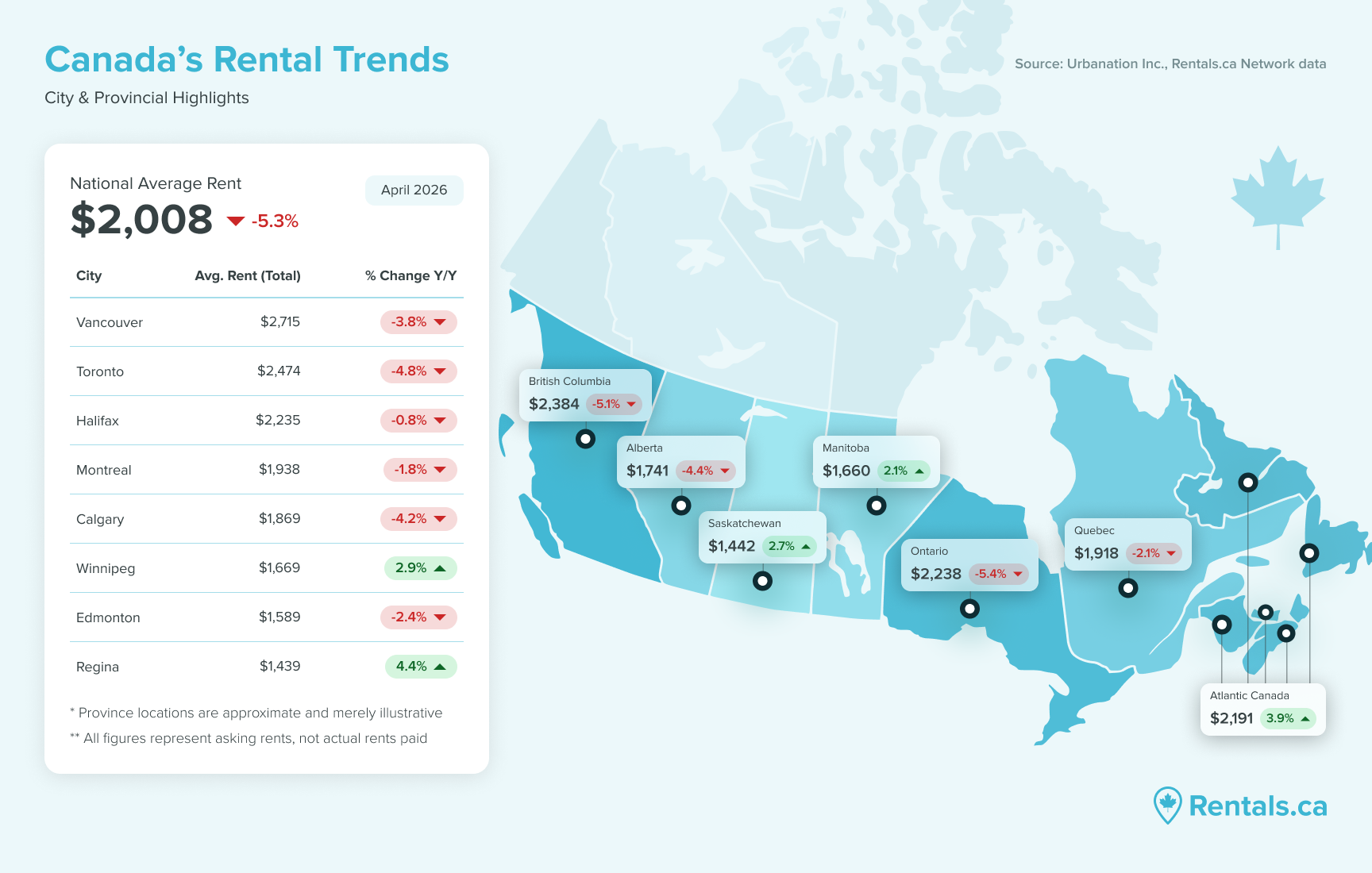
B.C.'s rental market is still moving in favour of renters, at least on asking rents. A May statement from the B.C. Ministry of Housing and Municipal Affairs cited Rentals.ca data showing B.C. down 5.9 per cent year over year for purpose-built apartment and condo rents, with Vancouver recording the largest decline among the six largest Canadian markets.
The ministry summary said Vancouver apartment rents were down 5.3 per cent to $2,679, one-bedroom rents were down seven per cent to $2,358, and three-bedroom rents were down 7.7 per cent to $3,876. It also said Vancouver rents have declined year over year for 29 consecutive months and are now 19.4 per cent below their September 2023 peak.
Question
Does falling asking rent mean Vancouver has become affordable? Not yet. The direction has improved, but the base is still high. A one-bedroom average above $2,300 remains a heavy monthly cost for many households, especially when renters are also managing food, transportation, childcare, and debt payments.

Editor's Comment
Vancouver’s asking-rent slide is real and broadening into the inner suburbs, which changes the day-to-day leverage in negotiations. For renters, the practical takeaway is that “market rent” is now whatever comparable units in the same building (or a few blocks away) are being advertised for this month—so bring those listings to renewal talks and push for incentives where vacancy is competing for attention. For owners and investors, the bigger story is underwriting risk: rents can drift down while carrying costs don’t. If you’re buying or renewing financing, re-run numbers using today’s asking rents, a realistic vacancy/turnover assumption, and the possibility of a softer renewal. Deals that penciled at 2023 peak rents may now require a lower price, more equity, or a longer hold to make sense.