
Vancouver Ranked Near the Bottom for Home-Buying Conditions
Share
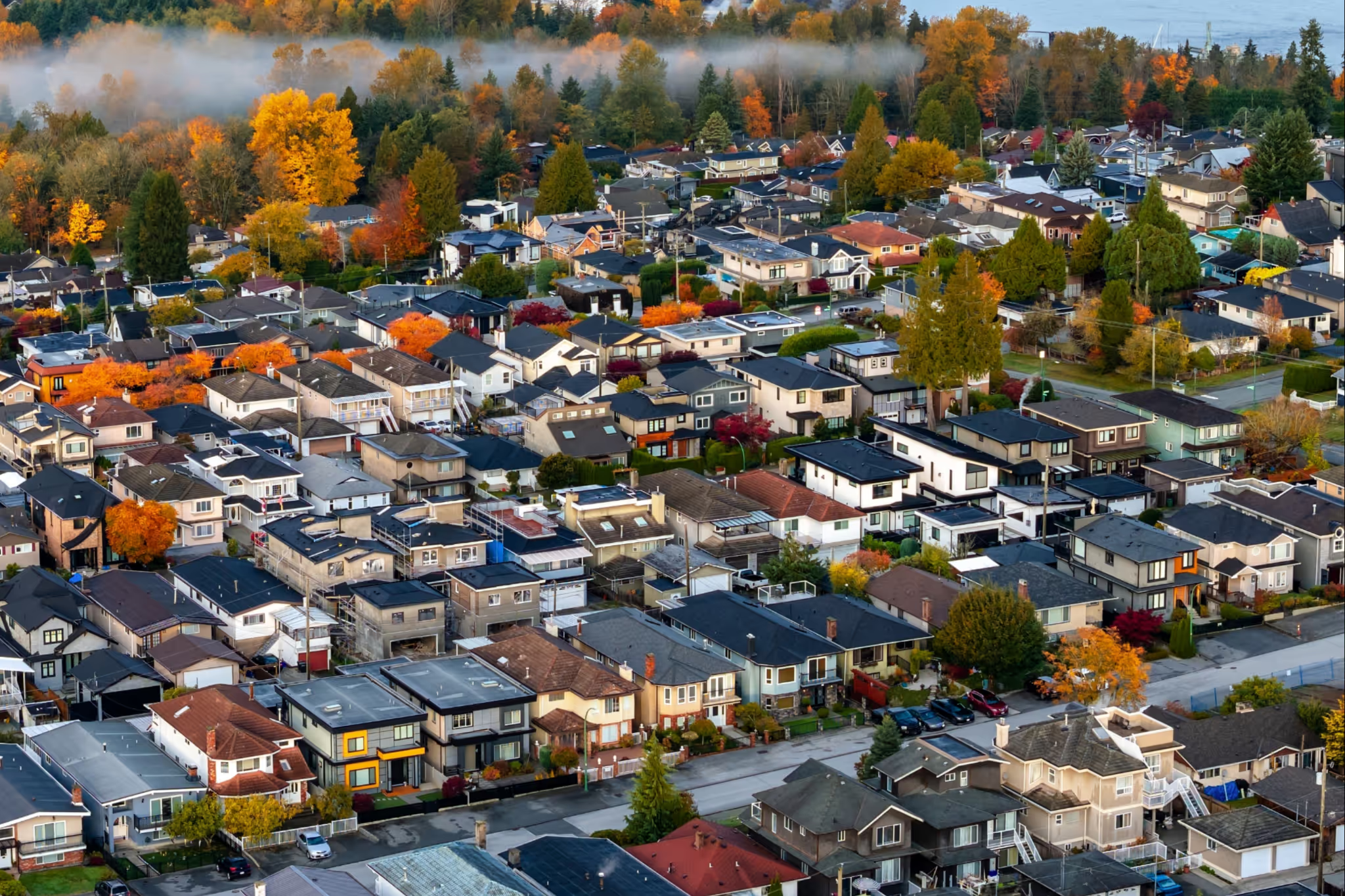
Vancouver has again landed near the bottom of a national home-buying ranking. Daily Hive reported that a MoneySense and Zoocasa list placed Vancouver 40th out of 44 Canadian real estate markets, giving it a 1.93 out of five rating for buying conditions.
The ranking considered average home prices, price growth over time, and neighbourhood economics. Greater Vancouver's average home price was listed at $1,155,575, with the report forecasting a three per cent decline over three years but 24 per cent growth over five years. The detached benchmark is still much harder for many households: Daily Hive cited an average detached price of $1,835,900, implying a minimum down payment of about $367,180 when a buyer needs 20 per cent down.
Question
Why can a softer price forecast still leave Vancouver difficult for buyers? A small expected price decline does not erase the income, savings, and financing gap created by a seven-figure entry price. Buyers still need cash for the down payment, closing costs, and a stress-tested mortgage payment before they can benefit from any discount.

Editor's Comment
Rankings like this mostly confirm what local buyers already feel: even if prices drift slightly lower, the real barrier is qualifying and carrying a seven‑figure purchase under today’s stress test. That’s why the “best deal” often isn’t detached—it’s the home type that keeps monthly costs predictable once you add strata fees, insurance, and realistic rental/suite assumptions. For sellers, the takeaway is that affordability caps demand. Scarcity alone won’t rescue an optimistic list price if the buyer pool can’t finance it. Homes that clearly solve for lifestyle and economics—transit/schools, functional layouts, suite potential, or credible redevelopment value—will still outperform, but they need to be priced against current competing inventory, not last cycle’s peak expectations. And while buyers may look to the Island or further out, the fact that Chilliwack and the Fraser Valley also rank poorly is a reminder that affordability pressure has spread; moving outward doesn’t automatically create a “cheap” alternative once commuting and carrying costs are factored in.