
Vancouver's Underground 'Project of the Century': Why Stage 3 Water Restrictions Are Just the Beginning
Share
News article poster
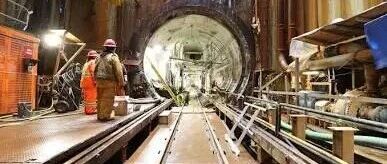
Starting June 8, 2026, Metro Vancouver will enforce Stage 3 water restrictions—banning lawn watering and car washing entirely. While drought and low snowpack are immediate triggers, the deeper reason lies beneath the surface: two concurrent 'century projects' upgrading the region's aging water infrastructure. The $495 million Stanley Park Water Supply Tunnel is currently excavating a 1.4-kilometre tunnel 35 to 60 metres below ground, replacing 1930s-era pipes. Meanwhile, the Second Narrows Water Supply Tunnel—already named 2024 Canadian Project of the Year—has completed its 1.1-kilometre bore under Burrard Inlet at 30 metres depth, with 5.8-metre diameter large enough to drive a truck through. Both projects aim to bring the region's water network to modern seismic standards capable of withstanding a 'one-in-10,000-year' earthquake.

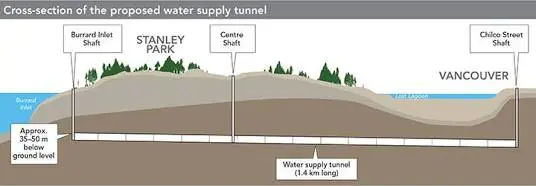
The timing is not coincidental. Metro Vancouver's water restrictions are partly necessary to manage pressure during the delicate integration of new tunnels into the existing grid. For the Stanley Park project, crews began sinking 40-metre vertical shafts in mid-2026, with Sunset Beach temporarily commandeered for pipeline disinfection through mid-summer. The critical milestone comes in July 2026, when the First Narrows crossing reconnects to the main network, allowing work to pivot underground toward Burrard Inlet and Chilco Street. Full completion is targeted for 2029. The Second Narrows tunnel faces an even more intricate challenge: connecting three massive steel mains without disrupting service. Metro Vancouver mandates only one pipe integration per year during low-demand months (October to May), stretching final completion to 2028. Burnaby Heights Park is already seeing landscape restoration, with underground valve chambers semi-buried and topped with native plants.

Sharp Peng Commentary
From a senior Greater Vancouver agent's perspective, these tunnels are the kind of invisible infrastructure that separates transient neighbourhoods from enduring ones. Buyers often fixate on granite counters and view corridors, but water security and seismic resilience determine whether a property holds value through a major earthquake or prolonged drought. The 2026-2029 construction window is genuinely disruptive for Sunset Beach and Stanley Park adjacencies—expect showing traffic to thin in summer 2026 and some buyer hesitation. That creates entry points for investors with longer horizons. For sellers in Burnaby Heights and the North Shore, the story is shifting from 'construction zone' to 'disaster-ready infrastructure.' The agents who understand this transition and can explain it calmly will earn client trust. The key is not to overstate completion dates—2028 and 2029 are firm—and not to pretend construction noise is irrelevant. It matters short-term; the infrastructure matters for decades.