
North Vancouver’s Basement Disincentive: Why Future Homes May Go Up to Three Storeys Instead of Down
Share
News article poster
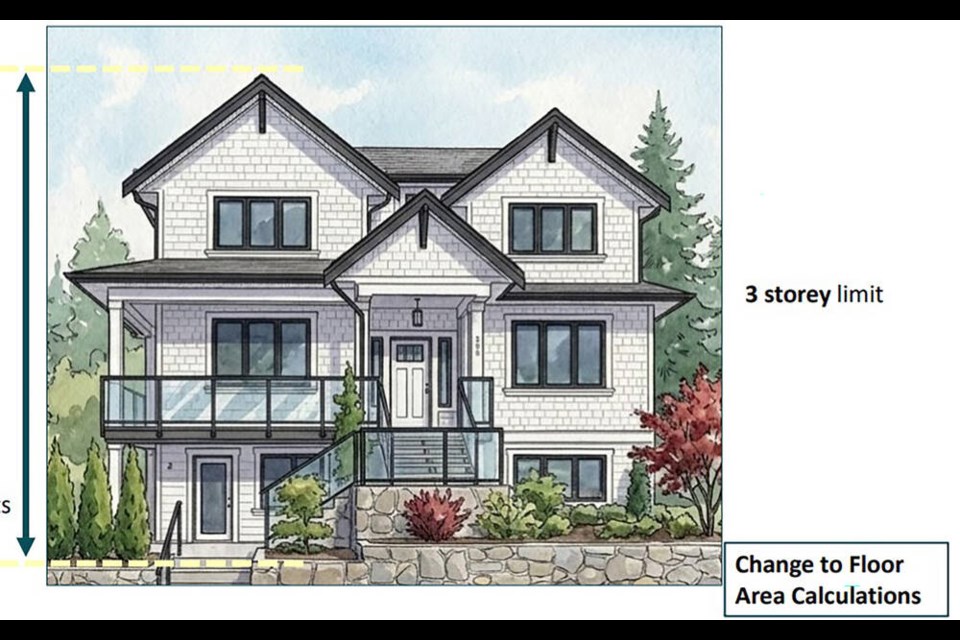
On June 1, District of North Vancouver council voted unanimously to advance a sweeping rewrite of its zoning bylaw that would fundamentally alter how single-family homes are constructed. Under the proposed changes, basements would no longer be exempt from a property’s total allowable buildable area, effectively disincentivizing deep excavation and concrete foundations. Simultaneously, the bylaw would permit houses to rise to a maximum height of 11.6 metres (38 feet) across three storeys, while garage space would also lose its exemption from floor-space calculations. The rules would apply to roughly 20,000 properties district-wide, with approximately 200 properties outside the urban containment boundary facing even stricter limits.
The policy shift addresses longstanding environmental and livability concerns that have plagued basement construction in the district. Staff reports highlight that subgrade levels lack natural sunlight—particularly problematic for secondary rental suites—while disrupting natural water tables and tree root systems. Basements are also prone to flooding and represent the most carbon-intensive and expensive component of residential construction due to excavation and concrete requirements. Initially, staff proposed nearly eliminating basements through a 1.2-metre excavation limit, but Mayor Mike Little successfully amended the motion to simply remove the floor-space exemption, avoiding the risk of rendering thousands of existing homes legally non-conforming while still steering development upward.
Question
If I'm looking to buy a single-family home in North Vancouver for rental income, should I avoid properties that rely on basement suites, or will the new three-storey design actually provide better rental options?

Zheyu Wu Commentary
From a senior Greater Vancouver agent’s perspective, this North Vancouver policy signals a broader shift across the North Shore toward climate-conscious density. The move away from carbon-intensive excavation toward vertical living space aligns with where sophisticated buyers are already heading—prioritizing light-filled rental units over subgrade suites. For investors, the coach house expansion is the hidden opportunity here, offering legitimate duplex potential without basement headaches. The key is timing: inventory with existing legal basement suites may see a short-term premium as they become “legacy” rental stock, while new construction will command premiums for above-ground living. Watch the public hearing closely; if passed, this sets a precedent that West Vancouver and the City of North Vancouver may follow.