
Mayfair West Redesign Doubles Density: 3,000 Homes, 1,400 Rental Units Planned Near Oakridge
Share
News article poster
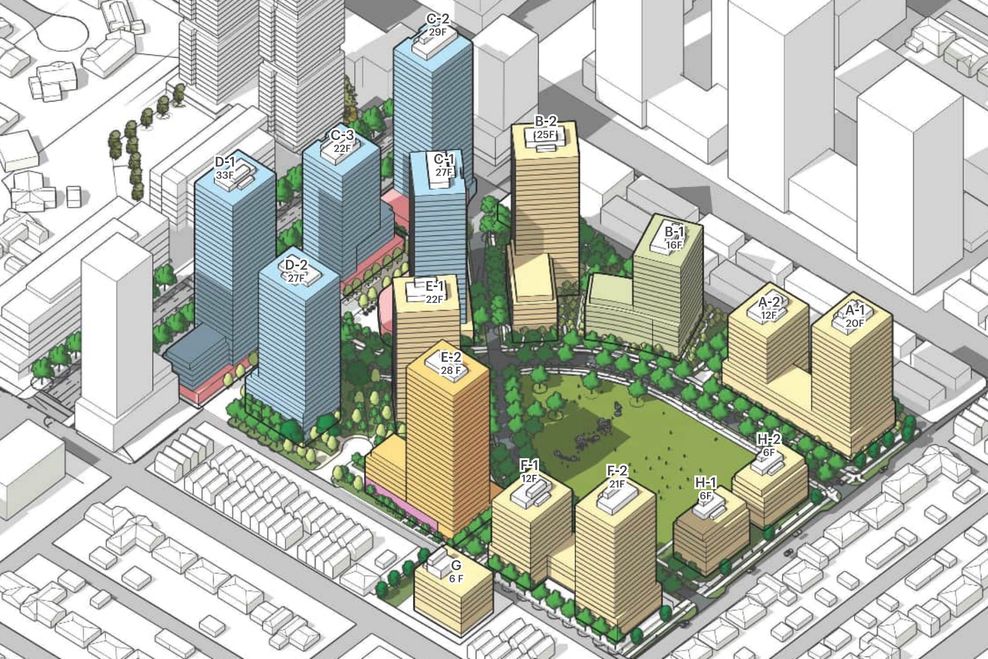
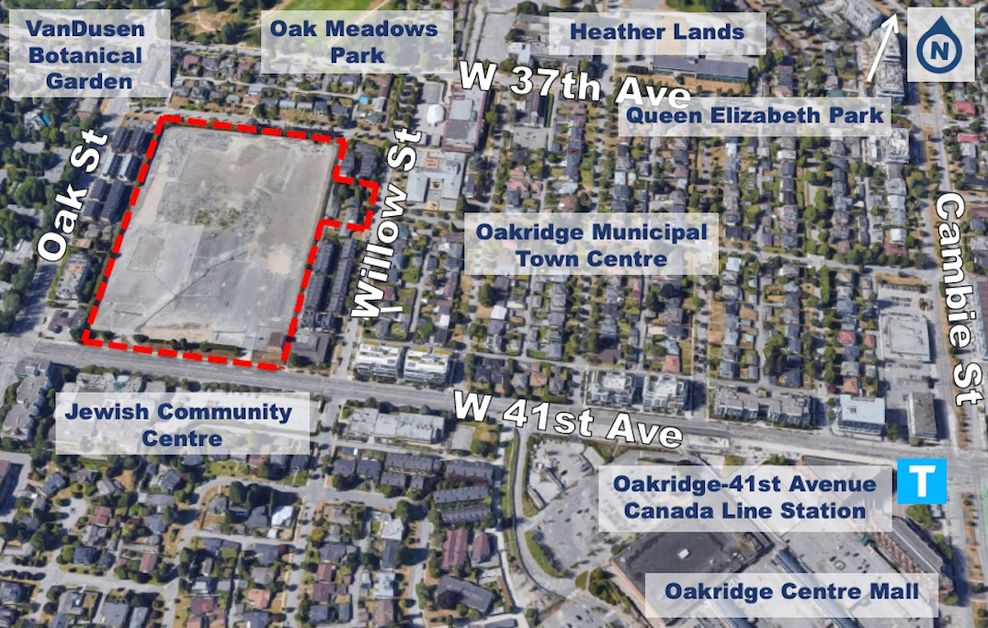
Grosvenor Americas filed a revised rezoning application in June 2026 for the 14-acre Mayfair West site at 929-989 West 41st Avenue, formerly TransLink’s Oakridge Transit Centre. The UK-based developer acquired the property and existing approvals from Modern Green Canada in 2022, but now argues the 2020 rezoning plan—approved by Vancouver City Council with 1,600 homes across five towers—is "no longer economically viable." Citing deteriorated construction costs, financing conditions, and market shifts since 2020, Grosvenor proposes increasing the floor area ratio from 2.36 to 3.98, expanding total building area to 2.48 million square feet from 1.44 million.
The architectural shift is dramatic. The new Hariri Pontarini Architects-designed concept replaces the low- and mid-rise northern half with four additional high-rise towers, bringing the total to 11 towers ranging from 16 to 33 storeys—up from the previous maximum of 26 storeys. While the 2-acre central park and seven acres of open space remain, the layout shifts south to accommodate two six-storey buildings fronting West 38th Avenue. Most significantly, the tenure mix pivots hard toward rental: secured purpose-built rental units surge from 180 to approximately 1,400 (1,238 market rental and 158 below-market), while strata condominiums hold steady at 1,231 units.

Kangrong Zhao Commentary
From a senior Greater Vancouver agent's perspective, this filing confirms the Cambie Corridor's transition from speculative condo flipping to institutional rental holding. Grosvenor isn't just asking for more height; they're restructuring the entire financial model away from strata sales toward long-term income generation. For clients, this means the Oakridge area will increasingly resemble a dense rental district like Metrotown's core rather than a traditional owner-occupied neighbourhood. Buyers seeking entry-level ownership here should move decisively when strata phases launch, while investors need to underwrite based on rental yield fundamentals rather than appreciation plays. The real story isn't the density increase—it's the tenure shift revealing where smart money thinks stability lies.