
Richmond Recycling Crackdown: Homeowners Now Face Utility Bill Penalties for Contaminated Bins
Share
News article poster
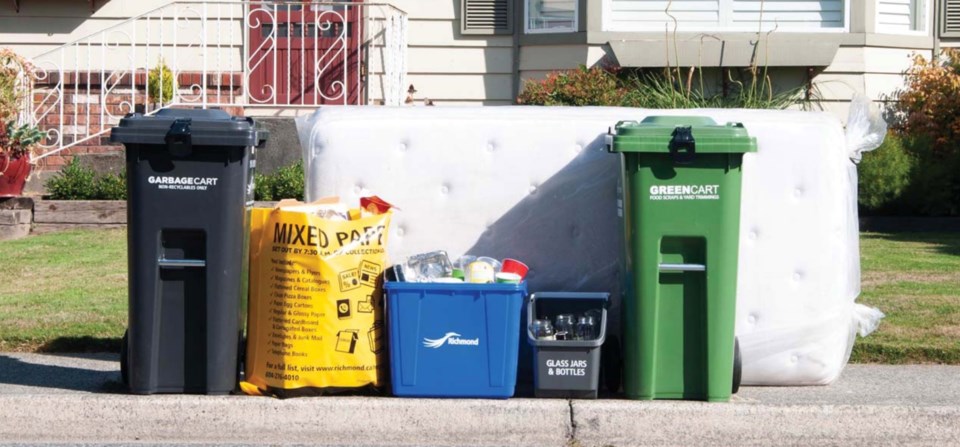
The City of Richmond is launching an aggressive recycling audit campaign in July 2026 after Recycle BC, the provincial oversight body for packaging and paper products, warned that local contamination levels have "exceeded acceptable limits." City workers will conduct random visual inspections of residential blue boxes, yellow bags, and grey glass bins across neighbourhoods. Homes with correctly sorted recycling receive gold star stickers; those with contamination get "Oops" notices identifying the specific error. The program comes with teeth: Richmond must cut contamination by 25 percent by year-end or face financial penalties that could affect resident utility costs.
Current contamination rates paint a clear picture of the problem. Curbside recycling sits at 7.3 percent contamination, while multi-family buildings are worse at 11.3 percent—both above Recycle BC thresholds. Common errors include placing glass in blue boxes instead of dedicated grey bins and bagging recyclables in plastic, which recycling facilities cannot process. Richmond collects residential materials on behalf of Recycle BC and receives financial incentives for collection and education, but those arrangements now include penalty clauses for non-compliance. Mayor Malcolm Brodie has framed the initiative around the city's "Circular City Strategy," emphasizing that proper sorting preserves material value and reduces landfill waste.
Question
I'm considering buying a townhouse or condo in Richmond—should I worry about whether the strata or building management is handling recycling properly, and could this hit my monthly costs?

Kirandip Singh Dhaliwal Commentary
From a senior Greater Vancouver agent's perspective, this is a microcosm of how municipal service quality increasingly filters into property economics. Richmond's recycling crunch won't move median prices, but it does sharpen the advantage of well-run buildings over neglected inventory. Buyers should treat waste management as a due diligence line item, especially for multi-family and rental portfolios. Sellers in strata properties might proactively request their council's contamination metrics—low numbers become a subtle marketing point. The deeper pattern is compliance cost migration: as Metro Vancouver municipalities face provincial waste diversion mandates, the buildings and neighbourhoods that adapt smoothly will carry lower friction costs. Watch which cities follow Richmond's audit model; this is unlikely to be the last recycling enforcement headline.