
Downtown Vancouver Office Vacancy May Have Peaked: What the 13% Turn Means for Condo Buyers and Investors
Share
News article poster
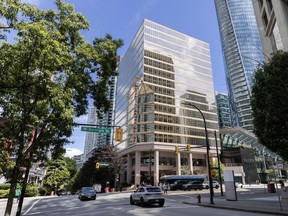
In mid-June 2026, commercial brokers announced the sale of 1185 West Georgia St., a 16-storey office tower at the northeast corner of West Georgia and Bute streets, marking the second significant downtown office transaction this year. The first occurred in January when Oceanic Plaza at 1066 West Hastings St., a Class AAA building, sold for $246 million—approximately $700 per square foot—according to the Vancouver Sun. These deals surface as the downtown office vacancy rate hovers near 13 percent, with CoStar Group and Avison Young analysts cautioning that while a rebound remains premature, the market may be approaching peak vacancy before a projected absorption cycle begins.
Avison Young's market intelligence team forecasts that Vancouver's trophy office vacancy rate could compress from 13 percent to as low as 2.3 percent by 2029, assuming leasing activity reaches 150 percent of the historical ten-year average absorption rate of 330,000 square feet annually and no new Class A or AAA supply enters the pipeline for the next three and a half years. Under a baseline scenario matching historical averages, vacancy would still fall to 6.3 percent. Glenn Gardner, principal at Avison Young, notes that existing tenants are already expanding footprints to accommodate return-to-office mandates requiring three to five days on-site, while Amazon consolidates its 600,000-square-foot hub at The Post on West Georgia, simultaneously returning smaller pockets of legacy space to the market.
Question
If I am looking at a Coal Harbour condo or a Downtown investment property, should I treat this office stabilization as a signal to buy before employment density rebounds and drives residential demand?
Jian Guo Zhang Commentary
From a senior Greater Vancouver agent's perspective, this office data serves as a lagging indicator for residential decisions rather than a leading one. The key is not to overreact to one headline transaction, but to understand that downtown's employment ecosystem is stabilizing after a brutal four-year correction. For residential buyers, this reinforces the narrative that the core remains viable long-term, but it does not override current inventory levels or interest rate constraints. Watch the absorption numbers quarterly; if they consistently exceed 400,000 square feet annually, then we can talk about spillover demand for nearby condos. Until then, buy for cash flow and lifestyle, not speculative office recovery.