
Oakridge Park Sets May 28 Opening for Mall and Rooftop Park
Share
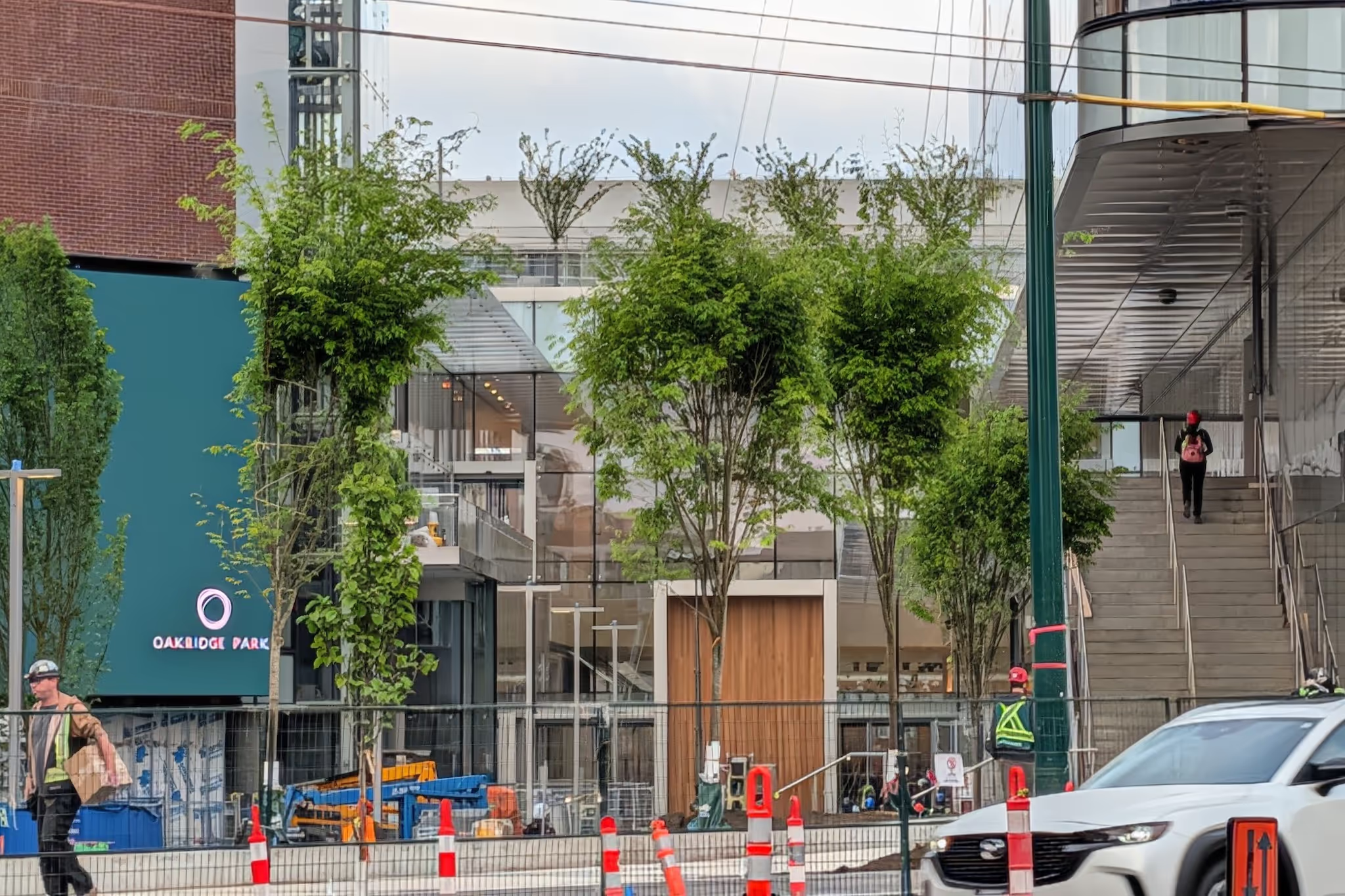
Oakridge Park has confirmed that its indoor mall and a major portion of its rooftop public park will open to the public at 11 a.m. on Thursday, May 28, 2026. The opening comes after the former Oakridge Centre was demolished and rebuilt as part of a high-density mixed-use redevelopment on the 28-acre Cambie Street site.
Daily Hive reported that about 500,000 square feet of the first phase's 650,000 square feet of leasable retail space is expected to open on day one. More than 100 retailers, restaurants, services, and other operators are expected to be ready, including Time Out Market Vancouver, a 50,000-square-foot food hall with 18 kitchens, three bars, event space, roughly 1,000 seats, and an outdoor terrace connected to the rooftop park.
Question
For nearby homeowners and buyers, the opening changes the practical value of the Oakridge-41st Avenue area. A site that has been a construction zone for years is moving closer to becoming a daily shopping, dining, transit, and public-space anchor.

Editor's Comment
Oakridge Park finally moving from “construction story” to “daily-life amenity” is meaningful for the Oakridge–41st/Cambie corridor, but it’s not a one-line price catalyst. The May 28 opening—~500,000 sf of retail, Time Out Market, and a substantial portion of the rooftop park—will immediately improve walkable convenience and buyer perception for nearby condos and single-family pockets, especially for anyone prioritizing Canada Line access. For sellers, this is clean, factual listing language: confirmed mall and park opening date, upgraded station access, and the practical benefit of a site that’s no longer a constant disruption. For buyers, keep expectations grounded: the broader redevelopment is still staging in through late 2026–spring 2027, with the civic centre targeted for January 2027 and some anchors opening later. That means ongoing construction activity, evolving traffic patterns, and building-by-building differences in noise, views, and access. The 2,000 free three-hour parking stalls and improved station connections should help the centre function as a true regional node, but they can also change local congestion and curb dynamics—worth flagging for anyone buying on nearby side streets or in older strata buildings that already feel parking pressure.