
Vancouver's FIFA World Cup Price Tag Hits $729M: What the Real Bill Means for Your Neighbourhood
Share
News article poster
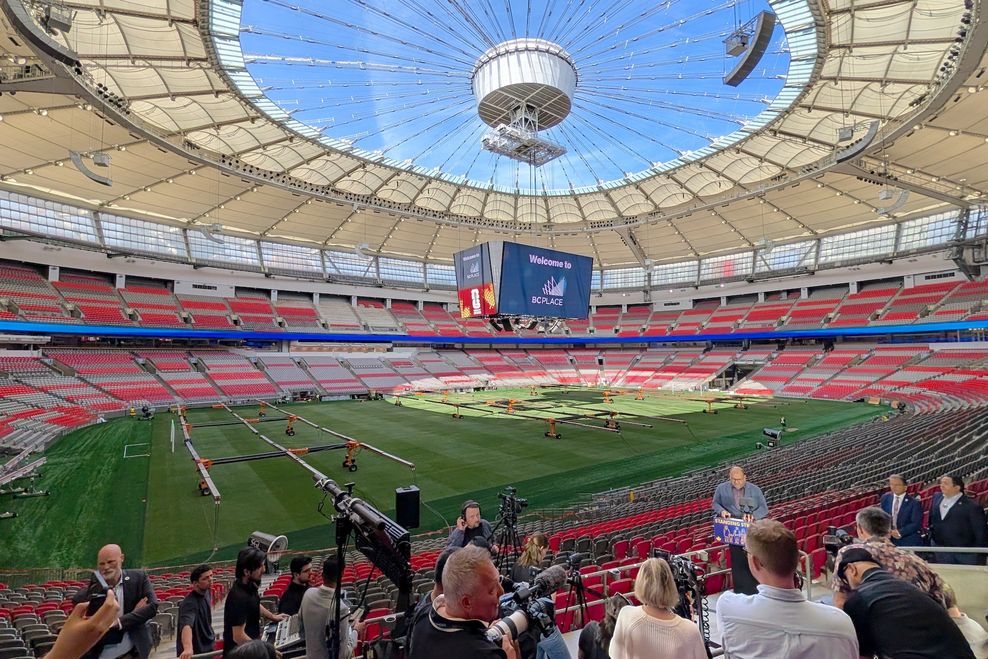
The Government of British Columbia released its final pre-tournament cost update on May 29, 2026, revealing that the combined federal, provincial, and municipal price tag for hosting seven FIFA World Cup matches in Vancouver has climbed to a range of $685 million to $729 million. This marks a significant jump from the June 2025 estimate of $532 million to $624 million. The increase reflects finalized transportation plans, the FIFA Fan Festival at Hastings Park, updated security protocols responding to global geopolitical shifts, and a reduced contingency fund now set at $80 million rather than the previous $145 million buffer.
Breaking down the numbers, provincial costs have more than doubled from the earlier $54–64 million range to $120–132 million. This includes $18 million in payments to the three host First Nations—Musqueam, Squamish, and Tsleil-Waututh—plus $13 million for tourism and economic development initiatives, $10 million for the Mini Peaks program creating 20 soccer mini-pitches across B.C., and nearly $2 million for community celebrations. The City of Vancouver's share has also risen from $261–281 million to $320–338 million, though the city emphasizes that most of this is covered by the temporary 2.5% FIFA hotel room tax running through 2030 rather than direct taxpayer burden.
Question
If I'm considering buying a condo near BC Place or Hastings Park, should the $729 million public investment make me more confident about future neighbourhood appreciation, or worried about hidden costs and post-event vacancy?
Richard Dou Commentary
From a senior Greater Vancouver agent's perspective, this cost update confirms what we've suspected: the World Cup is a massive infrastructure injection with uneven distribution. The neighbourhoods around BC Place and Hastings Park are receiving permanent upgrades, but the commercial activation—hotels, restaurants, retail—faces real execution risk. For buyers, the opportunity lies in identifying buildings that benefit from transit improvements without relying on event-driven demand. For sellers, the window to market proximity to legacy infrastructure is now through 2027, before the post-event narrative shifts. The hotel tax running to 2030 is the sleeper issue; it subtly reshapes visitor accommodation economics and may push more demand into compliant long-term furnished rentals. Watch the Fan Festival revenue numbers after July—they'll tell us whether the province's $1 billion GDP bet is grounded or optimistic.