
Burnaby Industrial Sells for $3.5M: Why Owner-Operators Are Still Buying Despite Rate Pressure
Share
News article poster
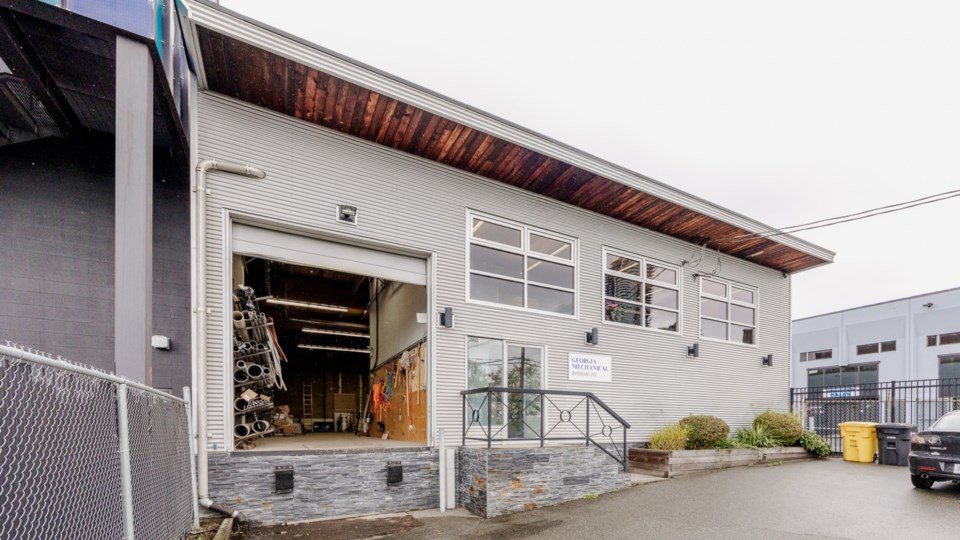
On May 20, 2026, a freestanding industrial building at 3905 2nd Ave. in Burnaby changed hands for $3,475,000, according to listing agents Stathis Michael Savvis and Amrita Guram of Truss Real Estate Group. The 4,344-square-foot property, constructed in 2012 on a compact 0.15-acre lot, carries M3 heavy industrial zoning that allows for flexible uses beyond standard warehousing. The buyer, G. Wilson Construction Management Ltd., acquired the Brentwood-area asset as an owner-operator play, securing modern office space with direct access to major transit routes and Vancouver proper. At roughly $800 per square foot, the transaction represents a significant capital commitment for a small-bay industrial asset in a market where institutional investors typically dominate larger footprints.
The Brentwood location puts this asset at the intersection of Burnaby's industrial heritage and its emerging residential density. While the immediate area has seen substantial condo development and retail intensification, pockets of M3-zoned land remain critical for trades and construction-related businesses that need vehicle access, equipment storage, and proximity to Vancouver without downtown premiums. The 2012 construction date means minimal deferred maintenance compared to the aging industrial stock elsewhere in the Lower Mainland, a factor that likely appealed to a construction management firm seeking operational efficiency rather than renovation projects. The listing emphasized quick transit access, suggesting the buyer values employee commute convenience alongside industrial functionality.
Question
If you're a construction firm or trade contractor currently leasing in Burnaby, does buying at $800 per square foot make financial sense when interest rates remain elevated and industrial rents have softened from 2022 peaks?

Julie Wei Commentary
From a senior Greater Vancouver agent's perspective, this transaction cuts through the noise about industrial market weakness. We're seeing a clear bifurcation: generic warehouse space faces rent pressure, while specialized, well-located, flexible-zoning product attracts serious owner-operator capital. Construction firms specifically value controlling their real estate because equipment security and operational continuity matter more than minor interest rate savings. For clients watching the Burnaby industrial submarket, the signal is not about price direction—it's about asset quality discrimination. Buyers should prioritize zoning flexibility and transit access over pure square footage. Sellers of older stock need to be realistic about the widening quality premium. The firms thriving right now are those treating real estate as operational infrastructure, not speculative leverage.