
Five Homes, 21-Year Leases: Habitat for Humanity Opens Rare Ownership Pathway in Richmond
Share
News article poster
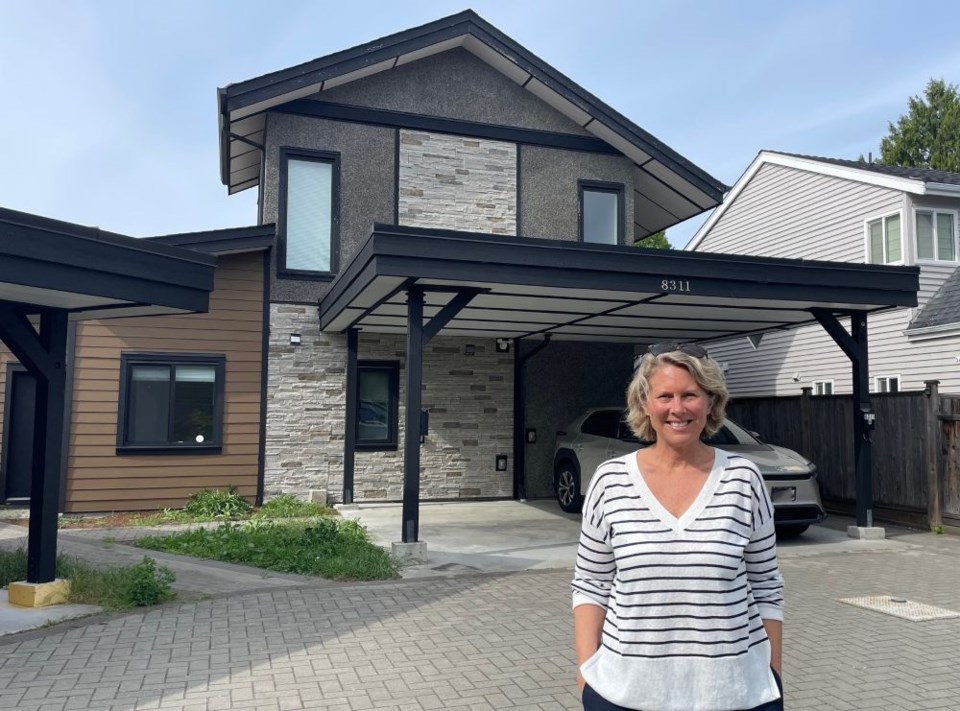
Habitat for Humanity Greater Vancouver has listed five available units in its Richmond townhouse complex on Ash Street, a development that opened in 2018 on land acquired from the City of Richmond at a reduced rate. The nonprofit is offering four 700-square-foot two-bedroom homes and one 1,300-square-foot three-bedroom unit, each featuring private backyards. Unlike traditional rental housing, these homes operate on a 21-year lease structure designed as a "pathway to ownership," where families earning between $58,000 and $141,000 annually pay no more than 30 percent of their income in rent while accumulating equity through required volunteer hours.
This represents a distinct category between market-rate ownership and social housing. The Ash Street complex, built seven years ago through a partnership with the municipality, allows residents to build equity that can eventually translate into a down payment for a market-rate home elsewhere. Lynne Stanger, director of family and community engagement for the organization, emphasized that the program targets "moderate-income" working families who fall between eligibility for subsidized social housing and the financial capacity to purchase in Greater Vancouver's expensive market. Notably, if a family's income exceeds the $141,000 cap during their tenancy, they are not required to vacate the unit.
Question
For families earning within the $58,000 to $141,000 range who have been priced out of Richmond's ownership market, does applying for one of these five units make more financial sense than continuing to rent conventionally while trying to save for a down payment?

Eric Pu Commentary
From a senior Greater Vancouver agent's perspective, this Habitat launch highlights the desperate scarcity of entry-level ownership pathways in Richmond. While five units won't change market fundamentals, they illustrate how creative tenure structures—combining municipal land contributions with nonprofit management—can bridge the gap for working families caught between renting and buying. For clients in that income bracket, this is worth investigating immediately given the limited inventory, but they need realistic expectations about the 21-year commitment and the eventual exit strategy. The rest of the market should watch whether this model scales; if the City of Richmond continues donating land for such projects, we might see a meaningful new supply category emerge over the next decade.